Maple Leaf Table Runner Free Crochet Pattern for Fall
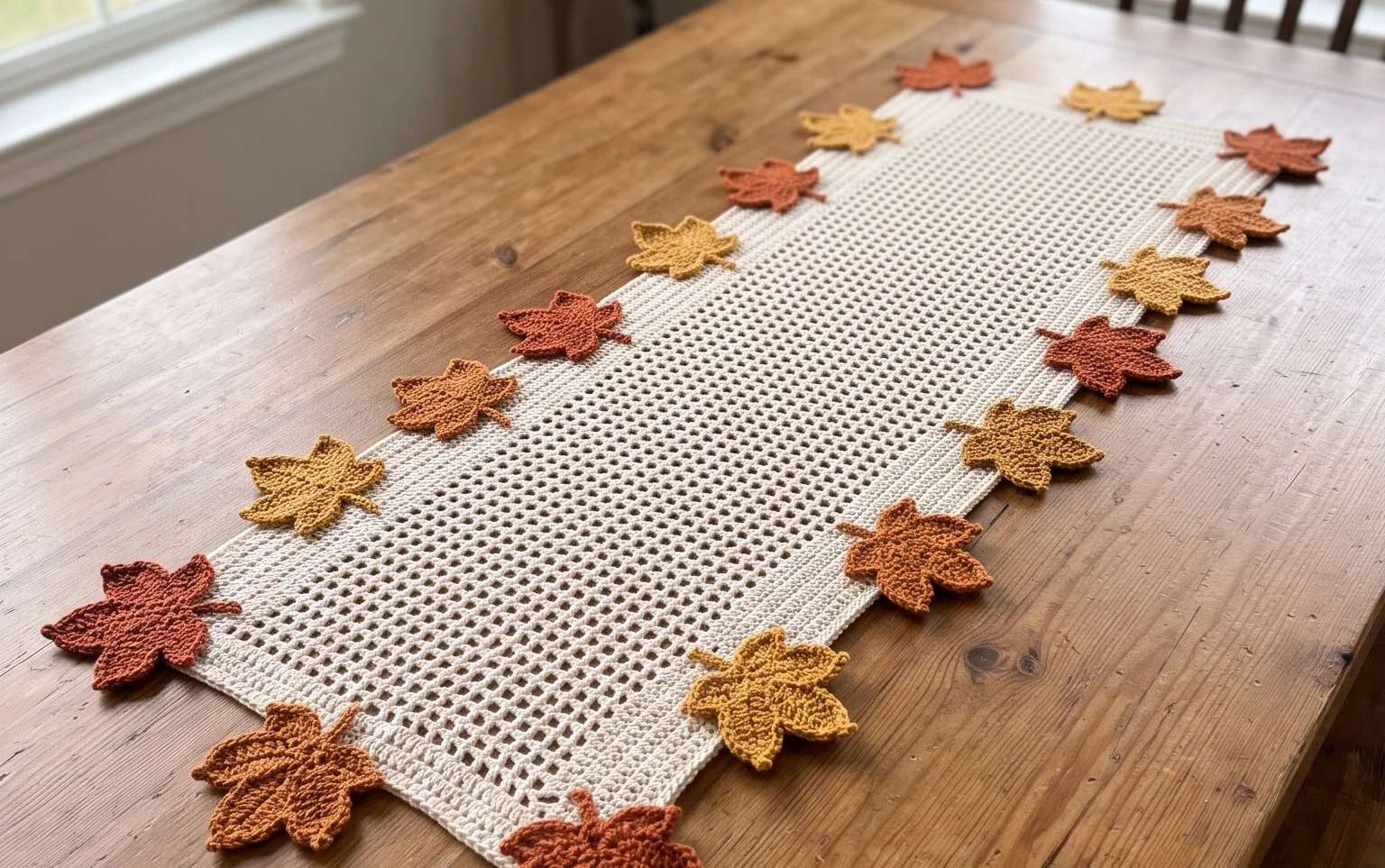
Rust-colored maple leaves bring a warm autumn look to a dining table, and a crocheted runner adds a soft, handmade texture beneath a vase, candle, or serving dishes. This project suits beginners who are ready to practice shaping, as well as experienced crocheters looking for a seasonal piece to make for their own home or give as a housewarming gift. The repeated leaf forms make the work satisfying to watch as it grows, while the rich color gives each section a clear outline. You’ll learn how the leaf shapes take form with crochet increases and decreases, along with ways to keep the finished runner neat and even. Choose a shade that fits your home, then enjoy a useful decoration you can bring out each fall.
Why You’ll Love This Pattern
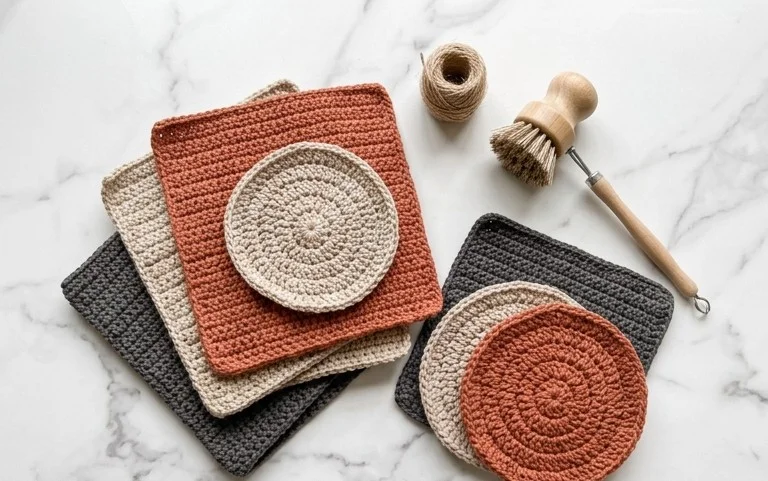
A firm cotton stitch gives this dishcloth a lightly textured surface that can handle everyday washing and wiping. The pattern uses single crochet in straight rows, so you can focus on keeping your edges even rather than learning a complicated stitch repeat.
This is a practical beginner project: it takes about two hours, uses one skein or less, and makes a useful gift for a new home. The simple shape also works well with leftover cotton yarn, as long as you have enough for the full cloth. A smooth, solid color makes it easier to see your stitches while you work.
The rows were easy to count, and the finished cloth feels sturdy without being stiff. I made mine in an afternoon and use it every day.
— Lena, sample maker
Pattern Overview & Skill Level
- Skill Level: Beginner. You need to chain and make single crochet stitches in rows.
- Approximate Time: About 1½–2½ hours, depending on your pace and tension.
- Construction: A flat rectangle worked back and forth in single crochet rows. The turning chain does not count as a stitch.
- Finished Dimensions & Sizing: About 8½ × 7½ in (21.5 × 19 cm) after washing and drying flat. Dimensions may vary with yarn and tension.
Gauge: 14 single crochet stitches and 16 rows measure about 4 in (10 cm). Check your gauge before starting if you want the finished cloth to match the listed dimensions. A different gauge will change its size and the amount of yarn needed.
Materials & Supplies Needed
- Yarn: About 65 yd (60 m) of worsted-weight cotton yarn, Category 4, in one color. Choose 100% cotton for absorbency and durability.
- Hook Size: 5.0 mm / H-8. Use the hook that gives you the stated gauge; cotton can feel firm, so avoid pulling the yarn tight.
- Notions: Tapestry needle for weaving in the yarn ends, scissors, and a ruler or measuring tape. A stitch marker can help identify the first stitch of each row.
- Substitutions: A cotton-linen blend is a suitable alternative and may make the cloth drape more softly. Cotton-bamboo yarn is also usable, though it can feel smoother and less firm. Acrylic is less absorbent and can behave differently around heat, so cotton is the better choice for a kitchen cloth. Changes in yarn weight or fiber can affect the size, texture, and yardage; make a gauge swatch before substituting.
Stitch Guide & Abbreviations (US Terms)
- ch: Chain.
- sc: Single crochet. Insert the hook into the stitch, yarn over and pull up a loop, yarn over again and pull through both loops.
- st / sts: Stitch / stitches.
- rep: Repeat.
Work the first single crochet into the first stitch of each row, not into the turning chain. The chain 1 at the start of a row gives you room to turn and does not count as a stitch.
Step-by-Step Pattern Instructions
Dishcloth
- Foundation: Make 31 ch. Keep the chain loose enough to insert your hook into each chain without stretching the loops.
- Row 1: Sc in the second ch from the hook and in each ch across. Turn. (30 sts)
- Row 2: Ch 1, sc in each st across. Turn. (30 sts)
- Rows 3–30: Rep Row 2. At the end of each row, check that you still have 30 sts. (30 sts per row)
Finishing
After Row 30, cut the yarn, leaving a tail of about 6 in (15 cm). Pull the tail through the last loop to secure it. Thread the tail onto a tapestry needle and weave it through the backs of several stitches. Change direction once, then trim the excess. Weave in the foundation tail the same way.
Lay the cloth flat and check that the sides are straight. If it measures smaller or larger than expected, that is usually a difference in gauge rather than a counting error. Wash and dry it according to the yarn label before first use.
Care & Washing Instructions
- For cotton yarn, machine wash with similar colors in cool or warm water, up to about 40°C (104°F), unless the yarn label gives different instructions.
- Dry flat or tumble dry on low if the yarn label allows it; reshape the edges while the cloth is damp.
- Blocking is usually optional for a dishcloth. If the edges curl, smooth the cloth flat while damp and let it dry fully in shape.
Pro Tips & Common Mistakes to Avoid
- Keep your tension steady: Cotton has little stretch, so very tight stitches can make the cloth stiff and difficult to wash. If your hook catches when you pull through, try relaxing your grip or moving up one hook size, then check your gauge again.
- Count the first and last stitches: It is easy to miss the final stitch at the turning edge and accidentally narrow the cloth. Place a marker in the first stitch of each row, or count across occasionally to confirm 30 stitches.
- Hide the ends securely: Weave each tail through the backs of several stitches, then change direction before trimming. This helps prevent the ends from working loose during repeated washing.
- Adjust the size with care: To make a wider cloth, add chains to the foundation, then work one fewer single crochet than the number of chains. Add or remove rows to change the length. A larger cloth needs more yarn, and changing the foundation may alter the proportions unless you also adjust the row count.
Frequently Asked Questions
Can I use a different yarn weight?
Yes, but the cloth will change size and feel. A lighter yarn makes a smaller, thinner cloth, while a heavier yarn makes a larger, thicker one. Use a hook suited to the yarn and make a swatch first; the listed dimensions are based on worsted cotton and the stated gauge.
How can I make the dishcloth smaller or larger?
For a narrower or wider cloth, change the starting chain while keeping one fewer single crochet than the chain count. For a shorter or longer cloth, work fewer or more rows. Keep track of the new stitch count, and plan for additional yarn if you increase either dimension.
Is this pattern suitable for a first crochet project?
Yes. It uses only chains and single crochet stitches worked in rows. The main thing to watch is the edge stitch: count each row so the rectangle stays at 30 stitches wide. If your first rows look uneven, continue for a few more; consistent practice often helps even out the tension.
Can I sell dishcloths made from this pattern?
Check the designer’s terms before selling finished items, and follow any attribution or sales limits they provide. The pattern instructions themselves should not be copied or redistributed without permission. For a finished cloth, include accurate fiber and care information for the yarn you used.
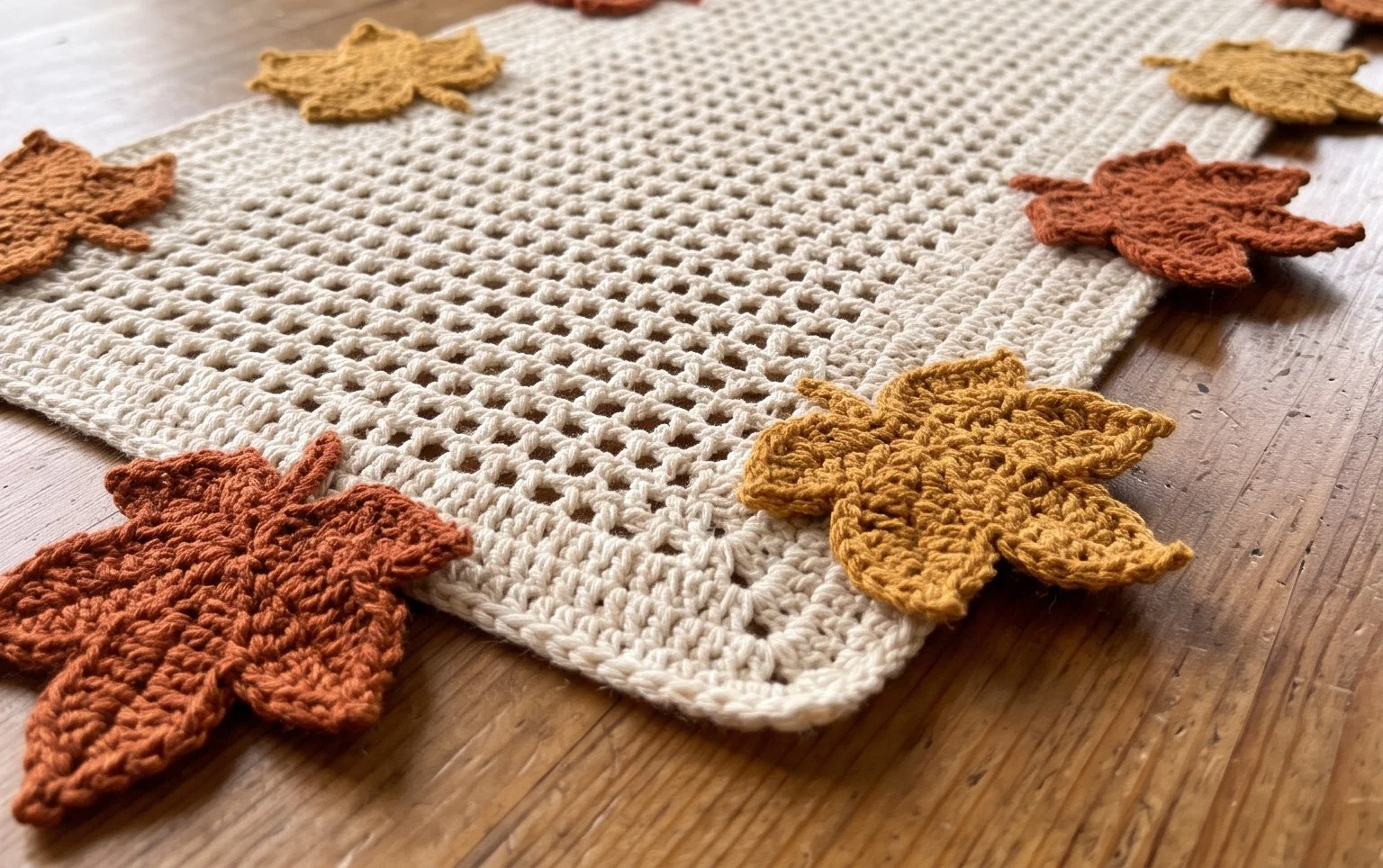
When the last maple leaf is finished, you’ll have a handmade runner that brings a warm rust tone and a bit of crochet texture to your autumn table. For a simple variation, make it in deep gold or forest green, or add another leaf repeat if you want a longer runner. A smooth yarn helps the leaf shapes show clearly, while gentle blocking can help the edges lie flat. If you make one, share a photo on Pinterest or your favorite social media site; it’s lovely to see the colors and table settings people choose. Then explore more free crochet patterns on the blog for your next seasonal project.