Easy Snowflake Crochet Pattern: Free Winter Design
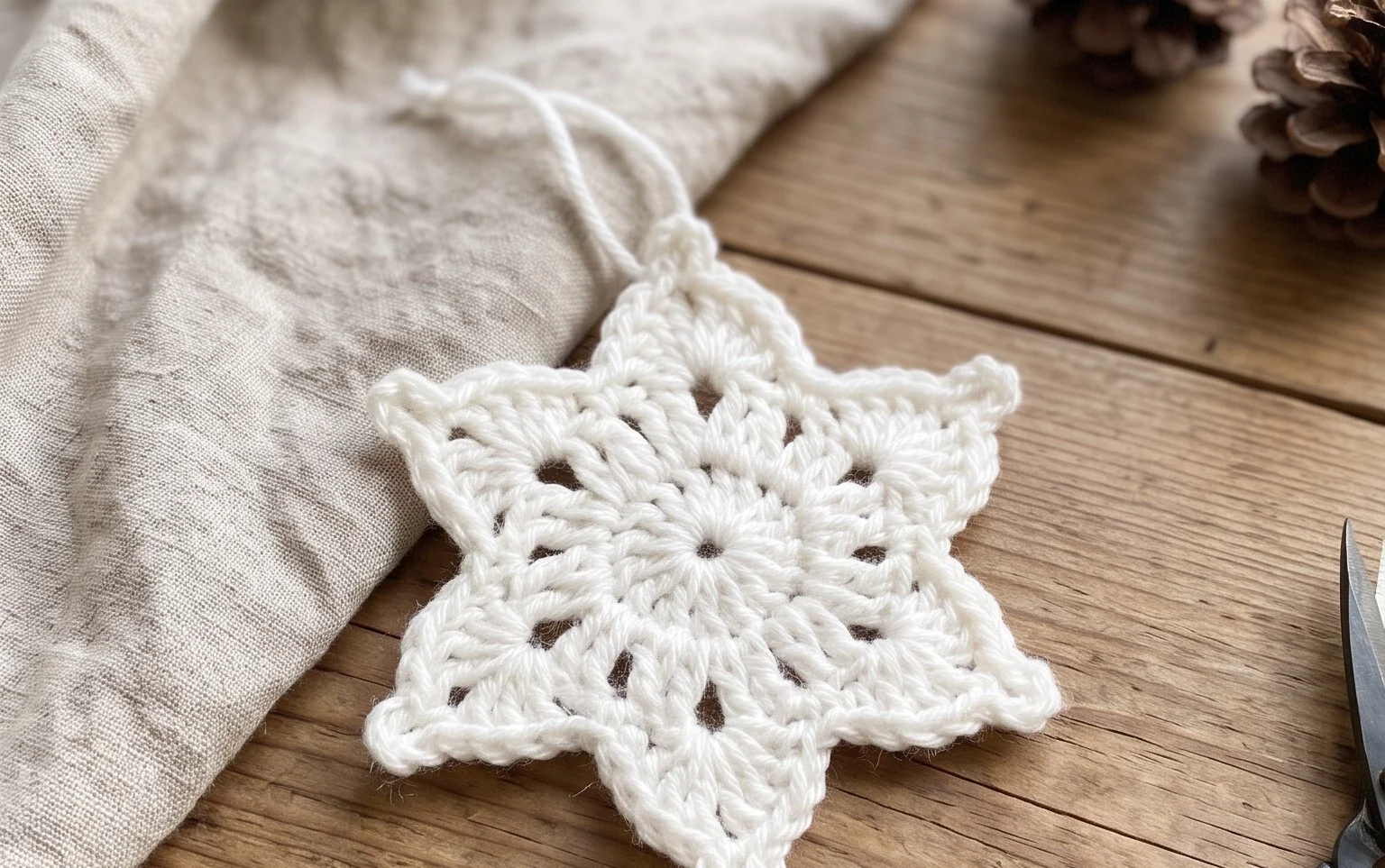
Fine cotton yarn and a small hook turn a few loops into a crisp snowflake with open spaces and delicate points. This winter motif is light enough to hang in a window, tie onto a wrapped gift, or add to a seasonal garland. Beginners can take it one round at a time, while experienced crocheters can enjoy finishing a useful little decoration in a short sitting. The pattern uses familiar chain stitches, slip stitches, and small picot points to shape the arms without sewing pieces together. You’ll find guidance for keeping the center flat, checking each round, and blocking the finished snowflake so its points hold their shape. Make one in a quiet afternoon, then use the same pattern to create a handful for holiday decorating or handmade gifts.
Why You’ll Love This Pattern
A firm cotton dishcloth measures about 8 inches square and uses simple single crochet stitches, so it gives you a useful project without complicated shaping. The straight rows make it easy to see where each stitch belongs, and the finished cloth works for washing dishes, wiping counters, or wrapping a small handmade gift.
This pattern is a good choice for practicing even tension and counting stitches. It uses about 100 yards of worsted-weight cotton, which makes it manageable for a small leftover ball, provided you have enough yarn to finish the last row. The repeating rows are also easy to pick up again after a break.
Sample maker feedback: The rows were easy to count, and the cotton cloth came out sturdy enough for everyday kitchen use.
The simple rows helped me keep my edges straight, and the finished cloth is a handy size for the sink.
— Maria, home crocheter
Pattern Overview & Skill Level
- Skill Level: Beginner. You need to chain and make single crochet stitches.
- Approximate Time: 2–3 hours, depending on your pace and how often you stop to check your stitch count.
- Construction: Work a flat rectangle in rows, turning at the end of each row. There is no seaming or joining.
- Finished Dimensions & Sizing: About 8 inches wide by 8 inches tall when worked to the gauge below. Cotton can relax with use and washing, so measure the cloth before its first wash.
For the listed size, aim for a gauge of 14 single crochet stitches and 16 rows in a 4-inch square. Gauge is a practical target rather than a reason to pull your stitches tight. If your swatch is smaller, try a larger hook; if it is larger, try a smaller hook.
Materials & Supplies Needed
- Yarn: About 100 yards of worsted-weight (#4) cotton yarn in one color. Cotton absorbs water and tolerates regular washing. A small amount of a second color is optional, but the instructions below use one color.
- Hook: 5.0 mm / H-8 crochet hook, or the hook needed to match gauge.
- Notions: Tapestry needle for weaving in the starting and finishing tails, scissors, and a ruler or tape measure.
- Substitutions: A cotton or cotton-bamboo yarn of similar weight is the closest substitute. Check its care label before using it for a kitchen cloth. Acrylic is less absorbent and may feel different against the hands. A thicker yarn or larger hook will make a larger, looser cloth and use more yarn; a thinner yarn or smaller hook will make a smaller, denser cloth.
Stitch Guide & Abbreviations (US Terms)
- ch = chain.
- sc = single crochet. Insert the hook into the stitch, yarn over and pull up a loop, then yarn over and pull through both loops on the hook.
- st(s) = stitch or stitches.
- rep = repeat.
- RS = right side, the face of the fabric you choose to show.
- WS = wrong side, the opposite face of the fabric.
- turn = rotate the work so you can crochet back across the row.
The turning chain does not count as a stitch in this pattern. Make one chain at the start of each row, then work the first single crochet into the first stitch of the row below.
Step-by-Step Pattern Instructions
Dishcloth
Use the 5.0 mm / H-8 hook and cotton yarn. Keep your chains relaxed enough to insert the hook into them without stretching or splitting the yarn. Count each row before turning; every row has 28 single crochet stitches.
- Foundation: Ch 29. The 29th chain is the turning chain for Row 1 and does not count as a stitch.
- Row 1: Sc in the second ch from the hook and in each ch across. Turn. (28 sts)
- Row 2: Ch 1, sc in each st across. Turn. (28 sts)
- Rows 3–32: Rep Row 2 for 30 more rows. At the end of Row 32, do not turn. (28 sts each row)
Finishing
Cut the yarn, leaving a tail of about 6 inches. Pull the tail through the last loop to secure it. Thread the tail onto a tapestry needle and weave it through several stitches on the wrong side, changing direction once so it is less likely to work loose. Weave in the foundation tail the same way. Avoid pulling the edges inward while securing the ends.
Lay the cloth flat and check its dimensions. If it measures close to 8 inches square, no blocking is needed. If the rows have curled slightly, dampen the fabric, shape it gently on a flat surface, and let it dry fully before use.
Care & Washing Instructions
- Wash cotton in warm water, up to 40°C (104°F), unless the yarn label gives different instructions.
- Dry the cloth flat or tumble-dry on low if the yarn label permits; high heat can cause shrinkage.
- Reshape the damp cloth by hand and let it dry flat; avoid stretching the corners while it is wet.
Pro Tips & Common Mistakes to Avoid
- Keep your tension even, especially along the foundation chain. A tight chain can make the lower edge narrower than the rest of the cloth.
- Count the stitches at the end of every row. If you accidentally skip the last stitch, the cloth will gradually become narrower.
- Weave in each tail on the wrong side, passing the needle through several stitches and changing direction. Do not rely on a single short pass to secure cotton yarn.
- To adjust the width, add or remove foundation chains while keeping the same row count. Each added chain adds about 1/14 inch at the stated gauge; a wider or taller cloth takes more yarn and time.
Frequently Asked Questions
Can I use a different cotton yarn?
Yes. Choose a similar worsted weight and check the yarn label for washing guidance. A yarn with a different thickness may change the finished size and absorbency, so make a small gauge swatch if you need the cloth to stay close to 8 inches square.
How can I make the dishcloth larger or smaller?
Change the starting chain to adjust the width, then add or remove rows to adjust the height. Keep an even number of chains plus one turning chain, and make sure every row has one fewer stitch than the total number of chains. Larger dimensions use more yarn.
Is this pattern suitable for a first crochet project?
Yes. It uses chains and single crochet in straight rows, with no shaping or joining. The main challenge is counting consistently, so check that each row has 28 stitches before moving on.
Can I sell dishcloths made from this pattern?
You may sell your finished work if the designer’s terms allow it. Check the pattern’s stated usage rules, and describe the item accurately, including its fiber and care needs.
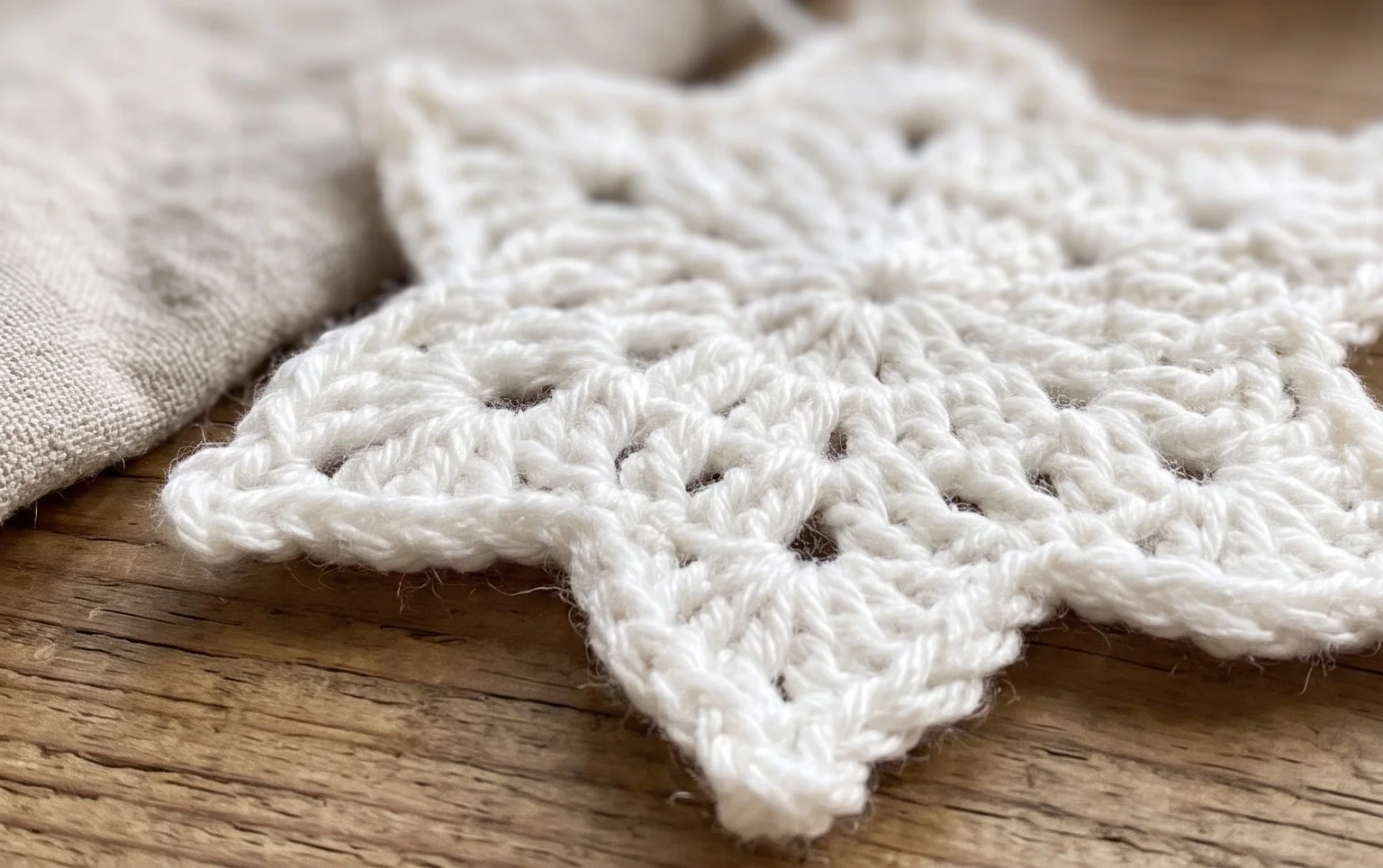
Your finished snowflake has a crisp, lacy shape that looks lovely against a window or tied onto a simple parcel. For a different look, switch from white cotton to pale blue yarn, or use a slightly finer thread for a smaller motif. A light blocking makes the points easier to see, so pin them gently into place and let the piece dry fully before hanging it. If you make one, share a photo on Pinterest or your favorite social media so other crocheters can see your color choice. Browse the blog for more free crochet patterns, including small seasonal projects you can finish with leftover yarn.