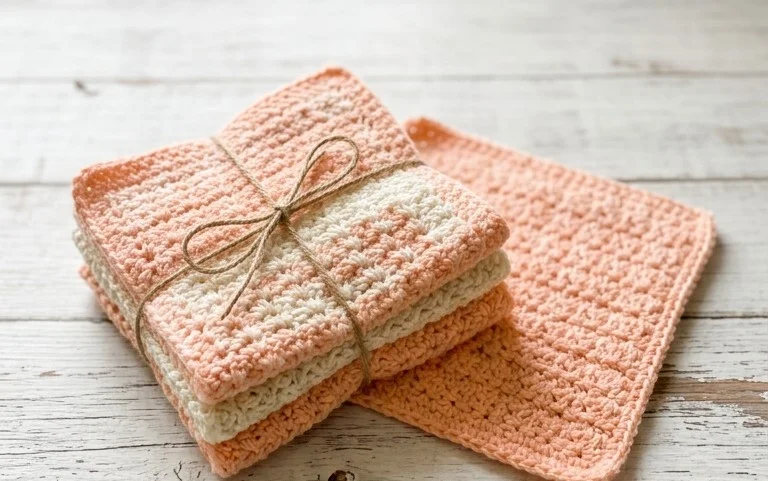
Easy Mansfield Moss Stitch Crochet Dishcloth Free Pattern
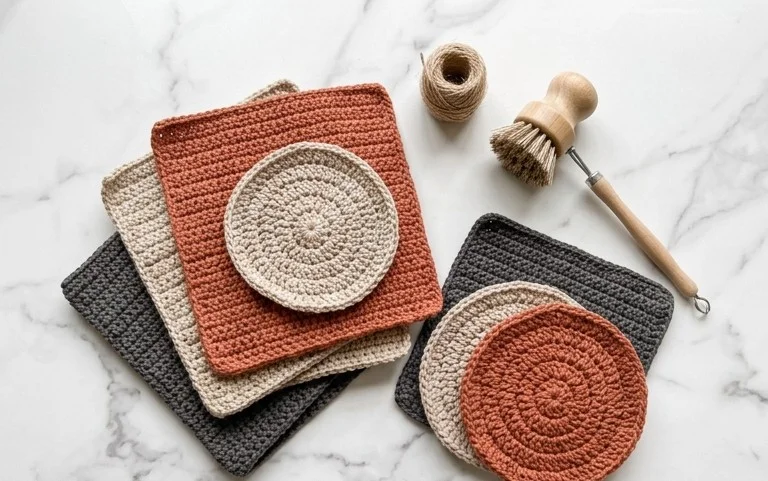
This textured square sits comfortably in your palm and scrubs stubborn pans without scratching the surface. It provides a satisfying weight that holds soap suds well while you work at the sink. Beginners often appreciate how the alternating stitches create a dense fabric that feels substantial rather than flimsy. You will focus on repeating two simple rows to build a classic, reliable kitchen staple that lasts through many cycles in the laundry. Learning this specific rhythm builds confidence for larger homeware projects. It remains a quick way to clear your stash and brighten up your countertop with handmade utility.
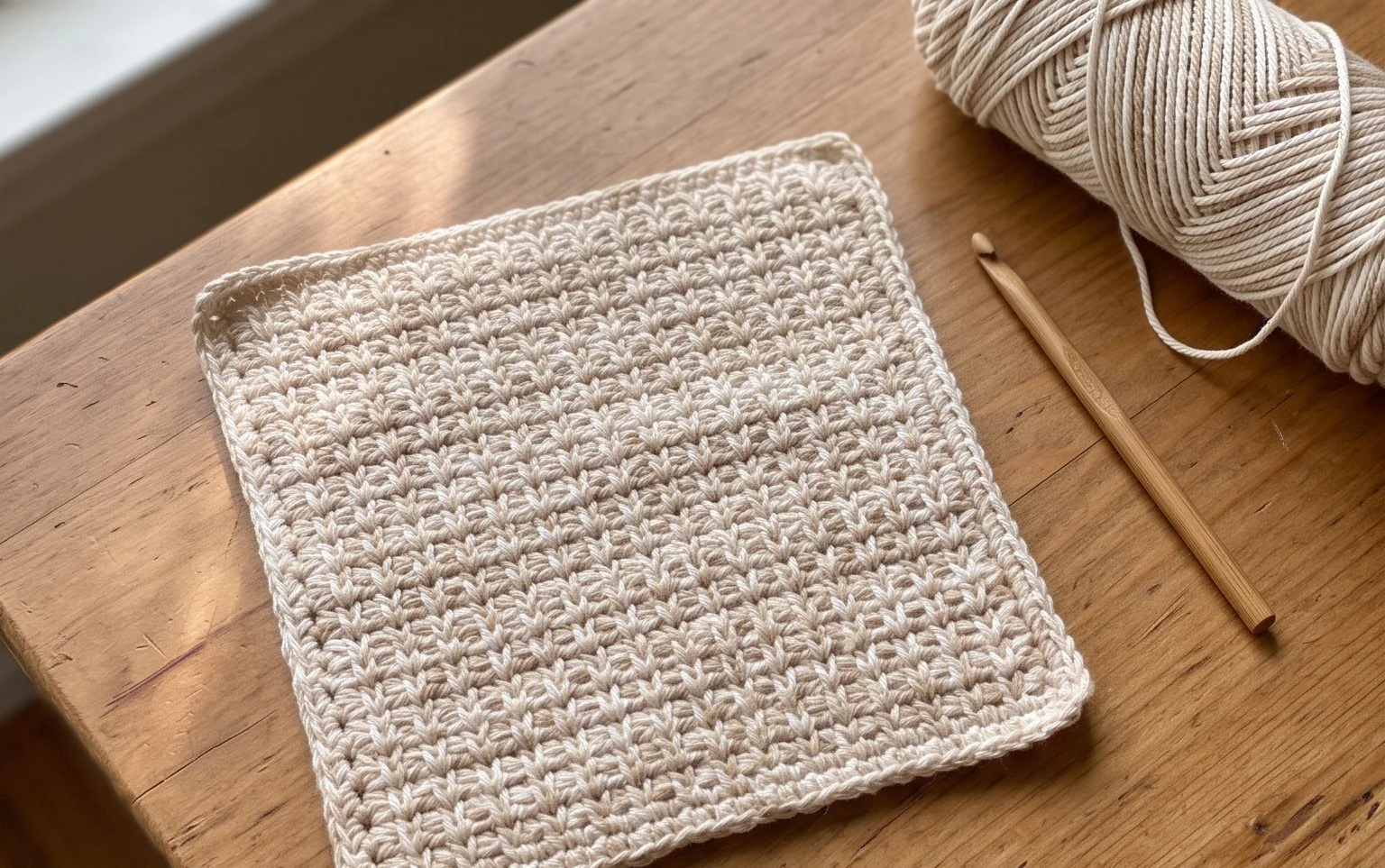
Why Crocheters Love It
The Classic Cotton Dishcloth is a fundamental project that teaches essential tension control and edge uniformity. Because it uses simple stitches, it is the ideal pattern for practicing consistent gauge without the stress of complex shaping. You will find that cotton yarn provides the necessary absorbency for kitchen cleanup, and the compact stitch structure creates a fabric durable enough to withstand daily washing. This project works up in under an hour, making it an excellent choice for using up small lengths of leftover worsted-weight yarn from larger projects.
I finally mastered my tension after making five of these dishcloths. They are the perfect size for washing dishes and hold up surprisingly well in the machine wash.
— Sarah, beginner crocheter
Pattern Overview & Skill Level
- Skill Level: Beginner
- Approximate Time: 45 to 60 minutes
- Construction: Worked in flat rows using a simple back-and-forth stitch pattern
- Finished Dimensions: 8 inches by 8 inches
Materials & Supplies Needed
- Yarn: Worsted weight (#4), 100% cotton, approximately 50 yards.
- Hook Size: 5.0 mm (H-8).
- Notions: Tapestry needle for weaving in ends, scissors, and a measuring tape.
- Yarn Substitutions: You may use a cotton-acrylic blend for a softer feel, though 100% cotton remains the superior choice for absorbency and heat resistance in the kitchen. Using a thinner yarn will result in a smaller finished size, so adjust your starting chain if you choose a DK weight yarn.
Stitch Guide & Abbreviations (US Terms)
- ch: chain
- st: stitch
- sc: single crochet
- hdc: half double crochet
- sl st: slip stitch
- turn: turn your work at the end of the row
Step-by-Step Pattern Instructions
Main Dishcloth Body
This dishcloth is worked in rows of alternating single crochet and half double crochet stitches to create a sturdy, textured surface.
- Row 1: Ch 30. Starting in the second chain from the hook, sc in each ch across. (29 sts)
- Row 2: Ch 1, turn. Hdc in each st across. (29 sts)
- Row 3: Ch 1, turn. Sc in each st across. (29 sts)
- Rows 4 through 28: Repeat Rows 2 and 3 until the piece measures approximately 8 inches long. Ensure you end on a sc row.
Border and Finishing
- Round 1: Do not fasten off after Row 28. Ch 1, turn the cloth to work along the side edge. Work sc evenly spaced down the side, placing 1 sc in the end of each row.
- Corner: When you reach the corner, work 3 sc in the same st to turn. Continue working sc along the foundation chain edge, then up the remaining side, and across the top edge.
- Closing: Join with a sl st to the first sc of the round. Fasten off leaving a 6-inch tail. Use your tapestry needle to weave the tail back and forth through the back of the work to secure the end.
Care & Washing Instructions
- Machine wash in warm water on a gentle cycle to preserve the fiber integrity.
- Tumble dry on low heat or lay the dishcloth flat on a towel to air dry completely.
- Reshape the dishcloth while damp if the corners begin to curl after several wash cycles.
Pro Tips & Common Mistakes to Avoid
Maintain consistent tension by ensuring your yarn feed is smooth and your hook grip is relaxed. Using a stitch marker at the start of your row helps you keep the edge straight, which prevents the dishcloth from turning into a trapezoid. If you find your work is pulling inward at the edges, try going up a half-size in hook diameter to loosen the stitch tension. You can easily adjust the size of the cloth by adding or subtracting chains in multiples of two; just remember that changing the size will increase or decrease the total yardage required.
Frequently Asked Questions
Can I use a larger hook for this pattern?
Using a larger hook will result in a looser, airier fabric. While this works well for a decorative cloth, it will be less effective at scrubbing surfaces, so I recommend sticking to the 5.0 mm hook for the best utility.
How do I make the dishcloth larger?
To increase the dimensions, add more chains to your starting row in multiples of two. You will need to continue working the repeat rows until the piece reaches your desired length.
Is it okay to use synthetic yarn for this project?
Acrylic yarn is not recommended for kitchen dishcloths because it is hydrophobic, meaning it does not absorb water well and can melt if it comes into contact with a hot pan.
May I sell the dishcloths I make from this pattern?
Yes, you are welcome to sell finished items made from this pattern. I ask that you credit the pattern design to me if you are selling them in an online shop or at craft fairs.
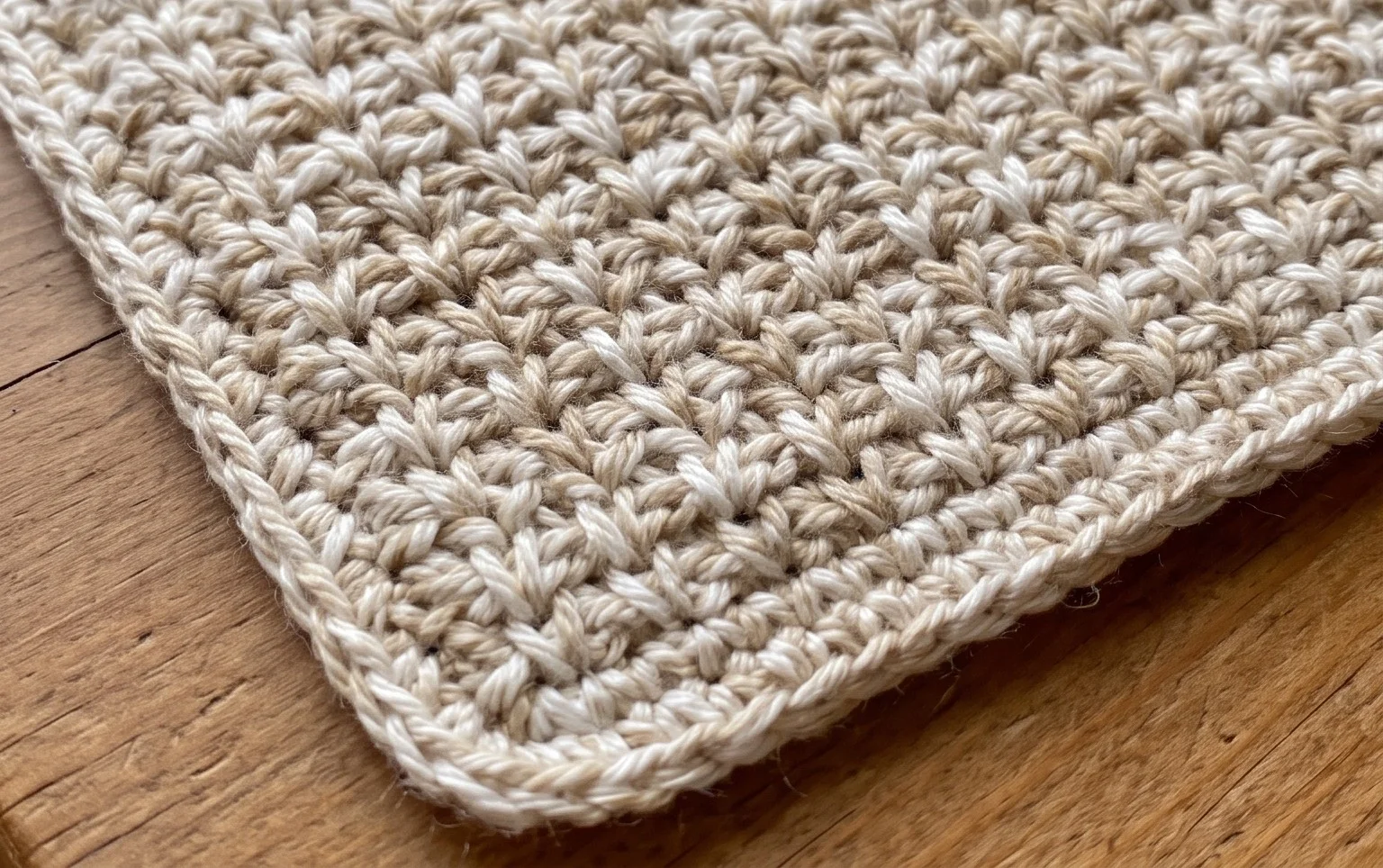
The finished piece creates a thick, squishy texture that scrubs dishes efficiently and dries out quickly between uses. You can change the aesthetic by alternating colors every four rows or extending the starting chain to turn this square into a larger washcloth for the bath. Sharing a photo of your finished work helps others see how different color combinations look in real kitchen settings. Explore more free patterns on the blog for additional household accessories that use up your remaining cotton yarn supplies.