25 Easy Christmas Granny Square Crochet Patterns to Make
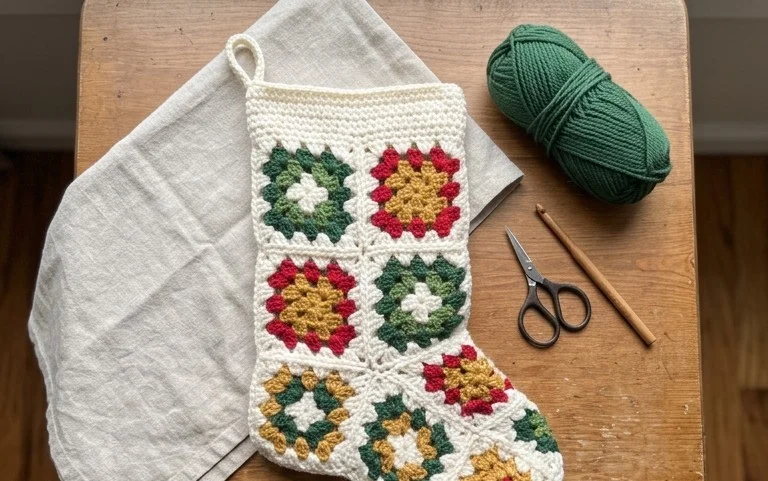
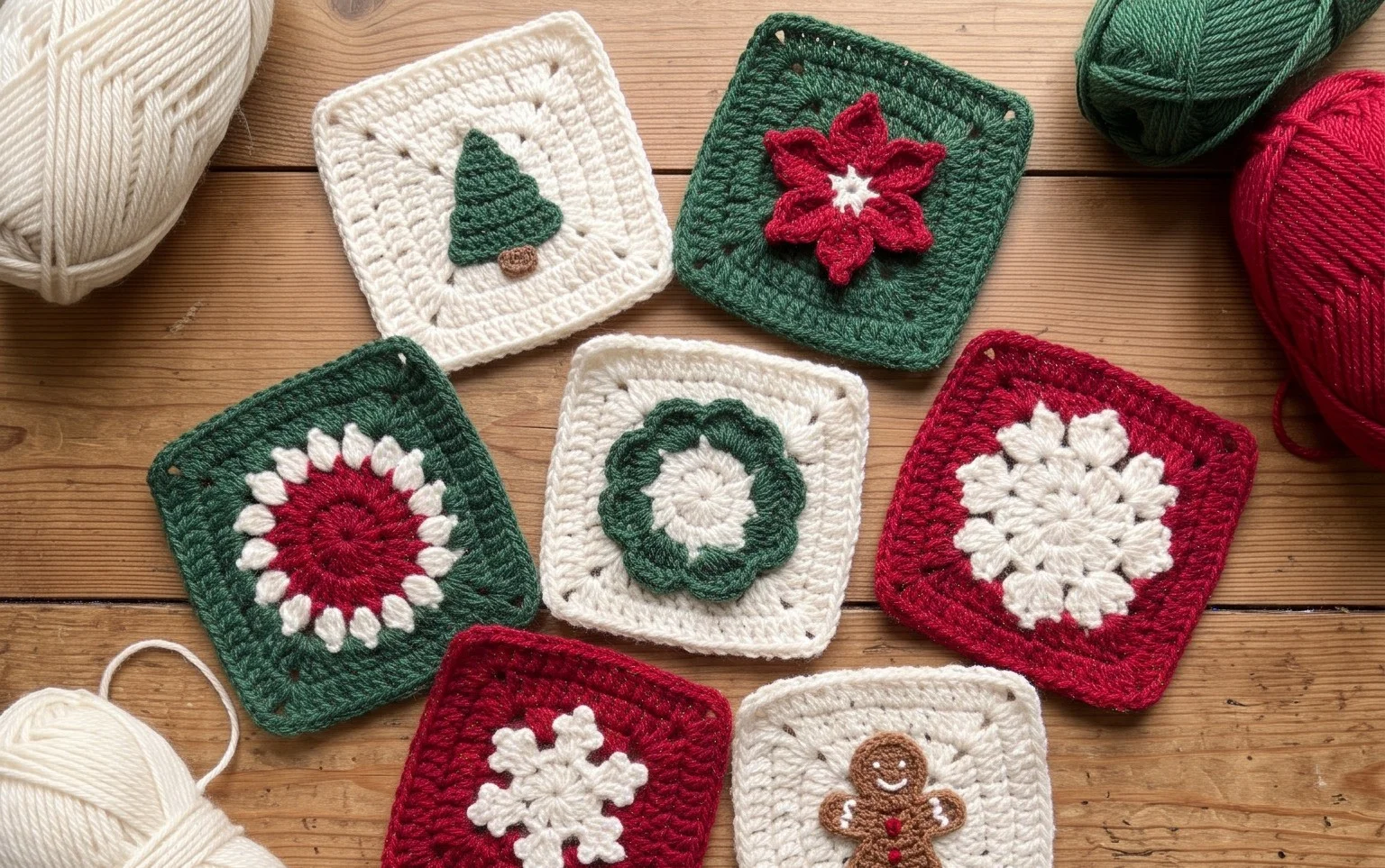
Red, cream, and forest-green yarn turn familiar granny clusters into little pieces of holiday color, from tree ornaments and stockings to blankets and pillow covers. These Christmas granny square crochet patterns suit beginners who want to practice changing colors, gift makers who need small projects, and home decor lovers planning a handmade touch for December. Each square is satisfying to finish on its own, and a stack of them can become a larger project when you have more time. You’ll find ideas that use classic chain spaces and clusters, along with festive motifs and color combinations. The collection also offers ways to adjust square size, join motifs neatly, and use leftover yarn without losing the seasonal look.
Why You’ll Love This Pattern
A firm cotton dishcloth is useful at the sink, easy to wash, and small enough to finish in an evening. This beginner-friendly square uses single crochet throughout, with alternating rows worked through the back loop to add a subtle ridged texture.
The pattern uses a modest amount of yarn, so a partial skein can be enough. Its simple stitch repeat also makes it a handy project for practicing even tension and learning to recognize the top loops of each stitch.
At about 7 inches square, the finished cloth fits comfortably in the hand without taking up much storage space. Make one for your own kitchen or pair several with a bar of soap for a practical handmade gift.
The back-loop rows gave my dishcloth a nice texture, and I finished it in one evening. I found the stitch count easy to keep track of.
— Nora, home crocheter
Pattern Overview & Skill Level
- Skill Level: Beginner. You should know how to chain and make a single crochet.
- Approximate Time: 2–3 hours, depending on your pace and tension.
- Construction: A flat square worked in rows, with alternating regular single crochet and back-loop single crochet. The edges are left unbordered.
- Finished Dimensions & Sizing: About 7 × 7 inches (18 × 18 cm) when made to gauge. Small differences are normal; cotton may relax slightly after washing.
Materials & Supplies Needed
- Yarn: Approximately 55 yards (50 m) of worsted-weight (#4) 100% cotton yarn in one color. Cotton is absorbent and holds up well to frequent washing.
- Hook Size: 5.0 mm / H-8 crochet hook. If your fabric feels stiff, try a 5.5 mm / I-9 hook; if it feels loose and holey, try a 4.5 mm / 7 hook.
- Notions: Tapestry needle for weaving in the two yarn ends, scissors, and a ruler or tape measure. A stitch marker can mark the first stitch of a row if you tend to lose track.
- Substitutions: A similar-weight cotton or cotton-linen blend can replace the cotton yarn. Acrylic is less absorbent and can feel warmer against the hands. A different yarn weight or hook will change the finished size and may change how much yarn you need.
Stitch Guide & Abbreviations (US Terms)
- ch = chain.
- sc = single crochet. Insert the hook into the indicated stitch, yarn over and pull up a loop, yarn over again and pull through both loops.
- BLO = back loop only. Work the stitch through the loop farthest from you at the top of the stitch, leaving the front loop unworked. This creates a raised ridge.
- st / sts = stitch / stitches.
- Rep = repeat.
The turning chain does not count as a stitch in this pattern. At the start of each row, make one chain, then work into the first stitch of the previous row.
Step-by-Step Pattern Instructions
Use US crochet terms. The pattern makes a square with 26 stitches across and 26 rows tall. Keep your turning chains loose enough that the side edges do not pull inward.
Dishcloth
- Foundation: Ch 27.
- Row 1: Sc in the second ch from the hook and in each ch across. Turn. (26 sts)
- Row 2: Ch 1, sc in each st across. Turn. (26 sts)
- Row 3: Ch 1, sc in the BLO of each st across. Turn. (26 sts)
- Row 4: Ch 1, sc in each st across, working through both loops. Turn. (26 sts)
- Rows 5–26: Repeat Rows 3 and 4 eleven times, ending with Row 4. (26 sts per row)
Finishing
Cut the yarn, leaving a tail of about 6 inches (15 cm). Pull the tail through the last loop to fasten off. Thread it onto a tapestry needle and weave it through several stitches along the edge, then change direction and weave it through a few more. Secure the starting tail the same way. Avoid pulling the yarn so tightly that the edge puckers. Lay the cloth flat and smooth the corners before measuring.
Care & Washing Instructions
- Wash cotton in cool or warm water, up to 40°C (104°F), with like colors and a mild detergent.
- Lay the cloth flat to dry, or tumble dry on low if the yarn label allows it; high heat may shrink cotton.
- Reshape the damp cloth into a square by gently easing the edges and corners into place. Follow the yarn label if its care instructions differ.
Pro Tips & Common Mistakes to Avoid
- Check your tension after the first few rows. If the square measures much less than 7 inches across by Row 26, try a larger hook; if it is too wide or loose, try a smaller one.
- Count 26 stitches at the end of every row. Missing the first or last stitch gradually narrows the cloth, so mark the first stitch if the row edges are hard to see.
- Keep the turning chain at one chain and do not work into it. The first single crochet goes into the first actual stitch, directly below the hook.
- For a larger cloth, add stitches in the foundation chain and add the same number of rows to keep a square shape. Each added stitch and row uses more yarn, so allow extra yardage and check the fabric dimensions as you work.
Frequently Asked Questions
Can I use a different yarn fiber?
Yes. Cotton is the best choice for an absorbent dishcloth, but a cotton-linen blend also works. Acrylic makes a less absorbent cloth, and a thicker yarn may produce a larger, heavier square. Check the yarn label and make a small swatch if you are unsure about the texture.
How can I make the dishcloth bigger or smaller?
Change the foundation chain to adjust the width, then add or remove rows to match that width. Keep the stitch and row counts close if you want a square. A larger cloth needs more yarn, while a smaller one uses less.
Is this pattern suitable for a first crochet project?
Yes, if you can chain and make a single crochet. The only new technique is working into the back loop, which leaves a visible ridge. Practice a few stitches on a scrap before starting the cloth if the two top loops are difficult to distinguish.
May I sell dishcloths made from this pattern?
Check the designer’s terms before selling finished items, and follow any requirements for pattern credit. This pattern’s construction is simple, but permission and attribution rules can vary by designer.
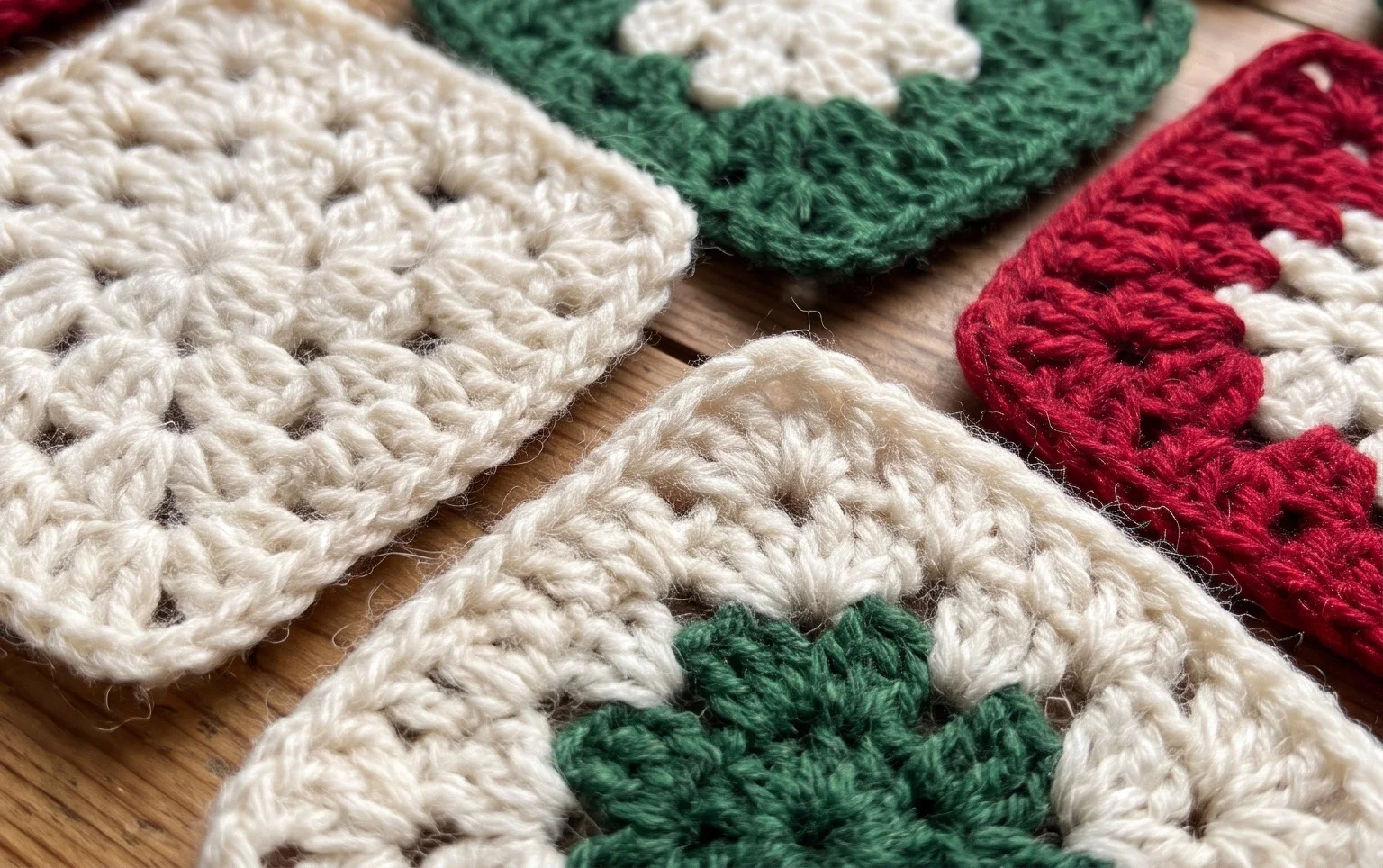
A finished Christmas granny square brings a clear patch of holiday color to a blanket, cushion, tree, or handmade gift, and joining several squares gives you a project that can grow a little at a time. For a simple variation, swap traditional red and green for cream and gold, or use one color throughout for a quieter look. Take a photo of your finished squares or project and share it on Pinterest or your favorite social platform. If you have yarn left in your basket, explore more free crochet patterns on the blog for your next cozy make.