15 Free Crochet Christmas Stocking Patterns for Decor
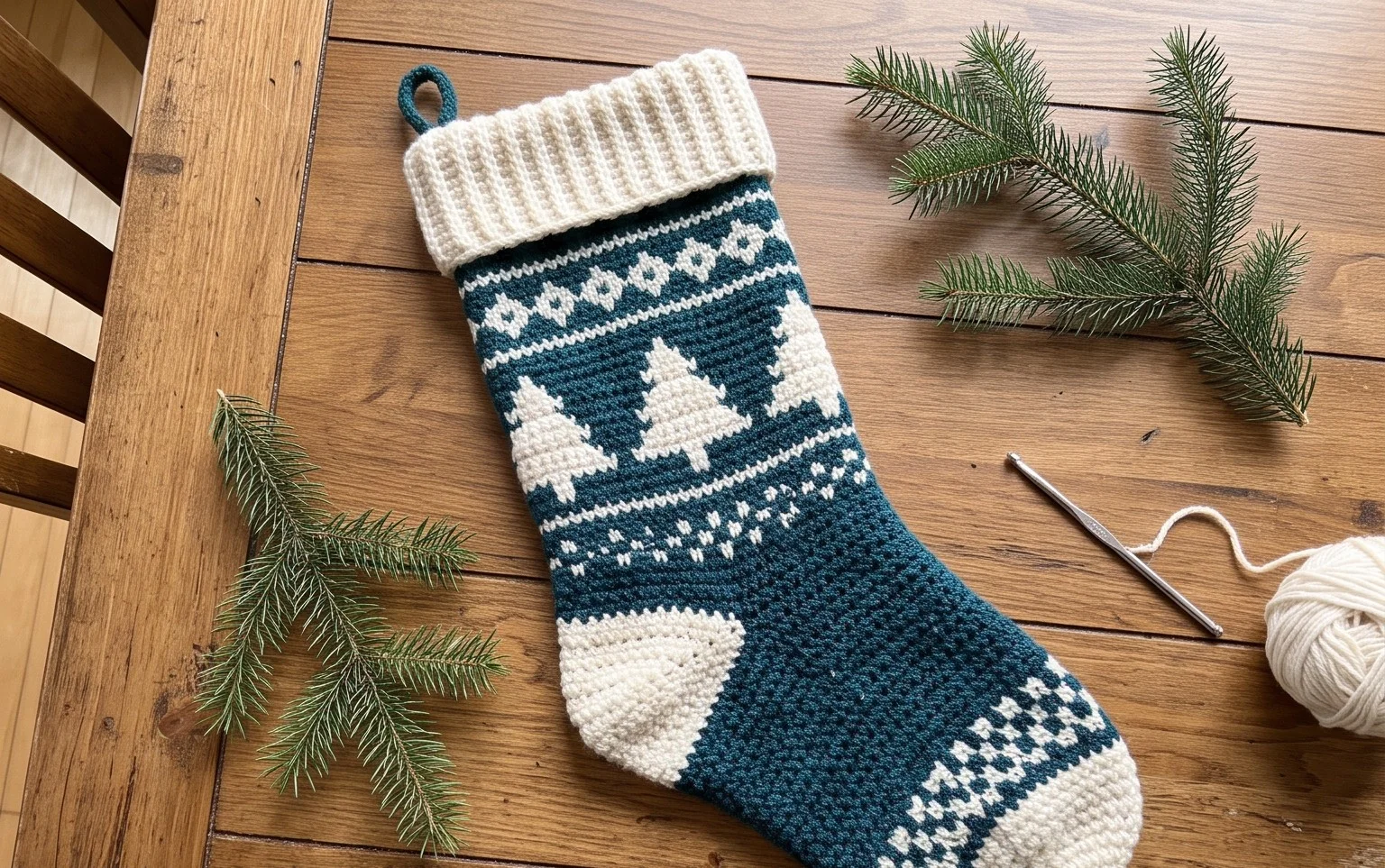
Soft yarn, a shaped toe, and a folded cuff give a crochet Christmas stocking its familiar handmade look. These 15 free patterns offer options for mantel displays, small gifts, and adding a personal touch to a tree or holiday table. Some use simple stitches that suit beginners, while others bring in texture, color changes, or decorative details for makers ready to try something new. Stockings are satisfying projects because each one takes shape quickly enough to see your progress, and leftover yarn can often provide the contrast color for a cuff or heel. As you browse, you’ll find ideas for choosing yarn, working common stitches such as single crochet and double crochet, and shaping the stocking so it hangs neatly. Pick a design that fits your skill level and the spot where you plan to display it.
Why You’ll Love This Pattern
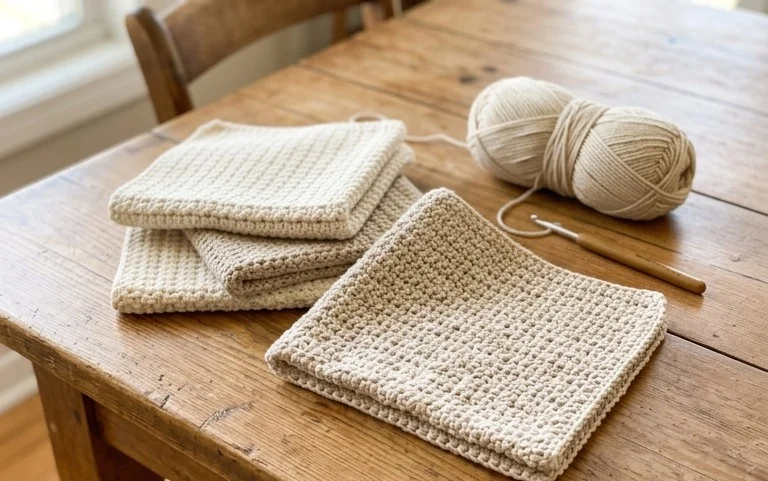
A firm cotton stitch gives this crochet dishcloth a useful, lightly textured surface that works for everyday kitchen cleanup. The square is made in rows, so there are no seams or complicated shaping steps to manage.
The pattern uses single crochet throughout, making it a good project for practicing even tension and counting stitches. It also works well with leftover cotton yarn, as long as you have enough of one color to keep the cloth consistent. Make one in an afternoon, or crochet a small stack for a practical housewarming gift.
The simple rows made this a relaxing project, and my cloth came out flat after a quick wash.
— Maya, home crocheter
Pattern Overview & Skill Level
- Skill Level: Beginner. You need to know how to chain and single crochet.
- Approximate Time: 2–3 hours, depending on your pace and how often you pause to count.
- Construction: A flat square worked back and forth in rows, with no joining or seaming.
- Finished Dimensions & Sizing: About 7.5 × 6.75 in (19 × 17 cm) after washing and drying flat, using the gauge below. Small differences in yarn and tension will change the final size.
- Gauge: 16 sc and 18 rows measure about 4 in (10 cm) in single crochet. Gauge is not essential for use, but matching it helps you reach the stated dimensions and yardage.
Materials & Supplies Needed
- Yarn: About 90 yd (82 m) of worsted-weight cotton yarn, Weight #4. Choose one color or use a cotton blend with a similar thickness. A solid, light color makes the stitches easier to see while you work.
- Hook: 5.0 mm / H-8 crochet hook. If your fabric feels stiff, try 5.5 mm; if it feels loose and gappy, try 4.5 mm.
- Notions: Tapestry needle for weaving in the two yarn ends, scissors, and a ruler or tape measure for checking gauge.
- Substitutions: A cotton-bamboo blend can make a softer, more drapey cloth. A thicker cotton may produce a larger, heavier square and use more yarn; a thinner yarn may make a smaller cloth. Avoid acrylic for a dishcloth intended for hot pans, since it can be damaged by heat.
Stitch Guide & Abbreviations (US Terms)
- ch: Chain.
- sc: Single crochet. Insert the hook into the stitch, yarn over and pull up a loop, yarn over again, then pull through both loops on the hook.
- st: Stitch.
- sts: Stitches.
- turn: Turn the work over to begin the next row.
The turning chain at the start of each row does not count as a stitch. Work the first single crochet into the first stitch of the previous row, not into the turning chain. This keeps the sides straight and maintains the 30-stitch count.
Step-by-Step Pattern Instructions
Dishcloth
- Foundation: Ch 31. The starting chain is not included in the stitch count.
- Row 1: Sc in the second ch from the hook and in each ch across. Turn. (30 sts)
- Row 2: Ch 1, sc in each st across. Turn. (30 sts)
- Rows 3–30: Repeat Row 2 for every row, working 30 sc across and turning at the end of each row. Each row has (30 sts). After Row 30, fasten off, leaving a tail long enough to weave in.
Finishing
Thread the yarn tail onto a tapestry needle. Weave it through several stitches on the wrong side, change direction, and weave through a few more stitches so the end is secure. Repeat with the starting tail. Trim the ends close without cutting into the fabric.
Check the cloth for loose or missed stitches before washing. If the edges curl slightly, wet the cloth according to the yarn label, press out excess water without twisting, and lay it flat to dry. Cotton often relaxes after its first wash.
Care & Washing Instructions
- Wash cotton dishcloths in warm water, around 40°C (104°F), with similar colors; follow the yarn label if it gives different directions.
- Dry flat or tumble dry on low if the yarn label allows it; reshape the square while it is damp.
- Block lightly by smoothing the edges flat as it dries. Avoid stretching the corners, which can leave the cloth misshapen.
Pro Tips & Common Mistakes to Avoid
- Keep a relaxed, even tension. If your foundation chain is much tighter than the rows, the bottom edge will pull inward; use a hook half a size larger just for the chain if needed.
- Count the stitches at the end of each row, especially the first few. Missing the last stitch can make the cloth narrower, while working into the turning chain can add an unwanted stitch.
- Weave each end through the backs of several stitches, then change direction before trimming. A short end woven in only one direction may work loose with repeated washing.
- For a larger cloth, add chains in multiples of one and work the same number of sc across each row. Every extra stitch widens the cloth and increases yarn use; adding rows makes it taller and also needs more yarn.
Frequently Asked Questions
Can I use a different yarn fiber?
Yes, but cotton is a practical choice for a washable kitchen cloth and handles warm water well. A cotton blend may feel softer, while acrylic is less suitable around hot cookware. Check the yarn label for washing and heat guidance.
How can I make the dishcloth smaller?
Start with fewer chains, then single crochet across the same number of stitches in every row. The cloth will be narrower. Work fewer rows to shorten it, and expect to use less yarn than the 90-yard estimate.
Is this pattern suitable for a first crochet project?
Yes. It uses only chains and single crochet, with no shaping or joining. Work the first few rows slowly and count 30 stitches at the end of each one to keep the sides even.
May I sell dishcloths made from this pattern?
Check the designer’s terms before selling finished items, and follow any limits or credit requirements stated there. If you sell the cloth, describe its fiber accurately and give the care instructions that match the yarn label.
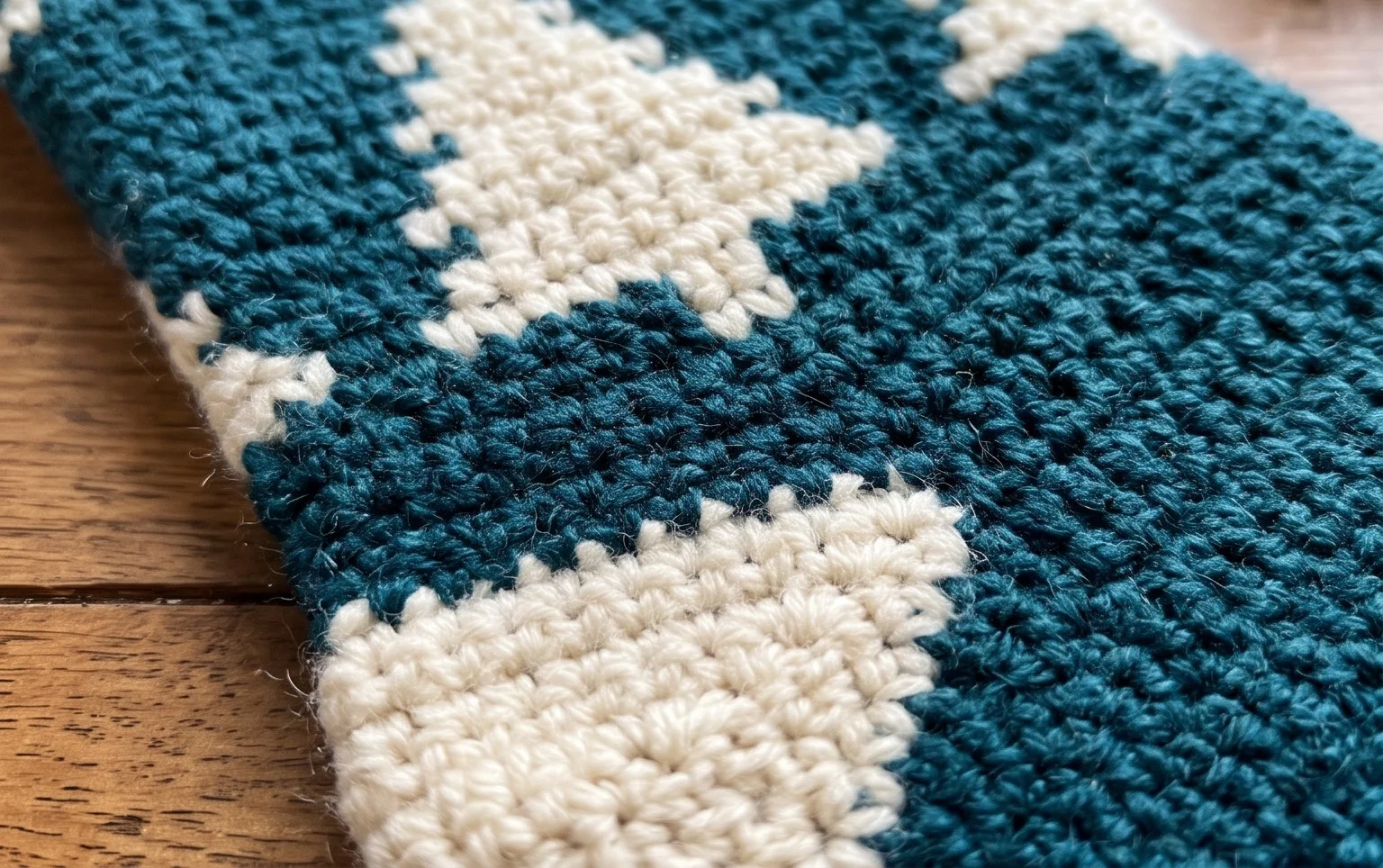
A finished crochet stocking brings handmade texture to a mantel, stair rail, or gift table, and each one can carry its own color and character. For a simple variation, keep the main stocking in a traditional red or cream and work the cuff in a contrasting shade, or use a smaller hook and lighter yarn for a petite ornament. If you make one, share a photo on Pinterest or your favorite social media platform so other makers can see how you styled it. You can also browse more free crochet patterns on the blog for seasonal decorations, useful home projects, and thoughtful handmade gifts.