Easy Farmhouse Dishcloth Set: Free Crochet Pattern
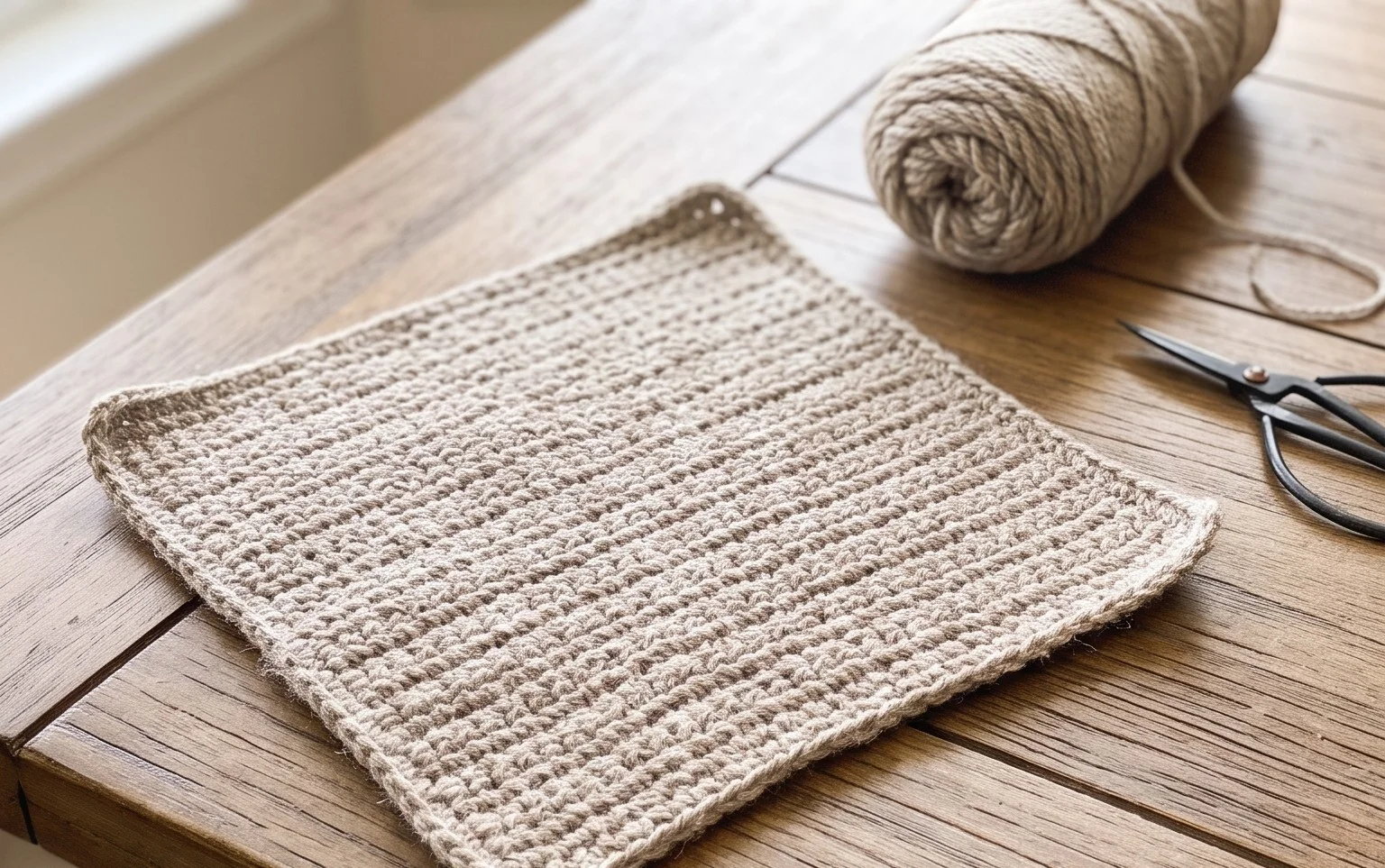
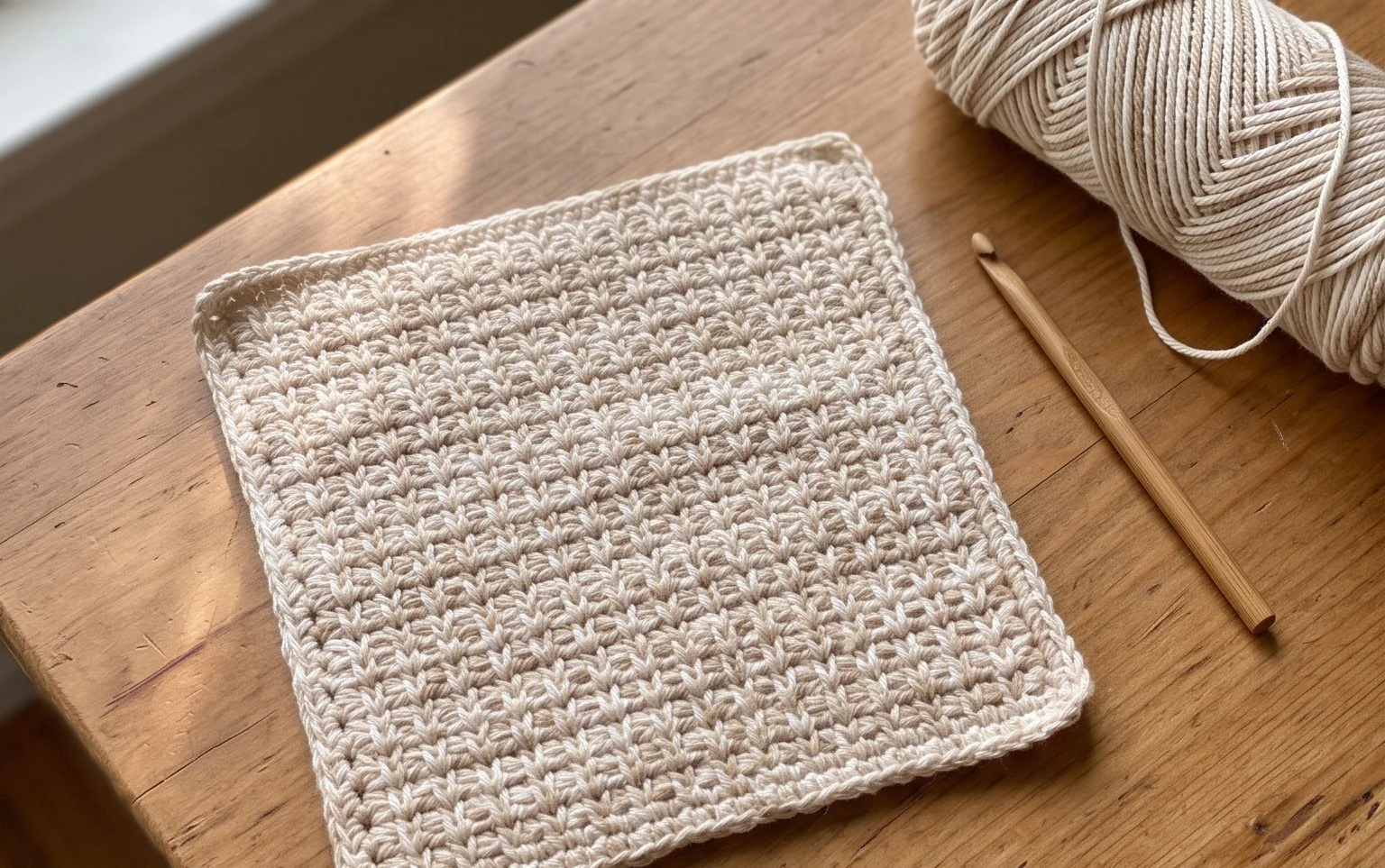
Rough cotton loops scrub away stubborn burnt bits on pans, leaving your kitchen counters clean without harsh chemicals or abrasive sponges. This project produces a thick, thirsty fabric that feels sturdy in your palm yet remains flexible enough to reach into narrow glasses. If you have a few hours on a weekend, you can easily finish a whole stack to replace those frayed store-bought rags. New crafters find the repetitive movement helpful for building consistent tension, while experienced makers enjoy the meditative pace. You will master basic alternating stitches to create an attractive, waffle-like surface that holds soap well and dries quickly between uses.
Why You’ll Love This Pattern
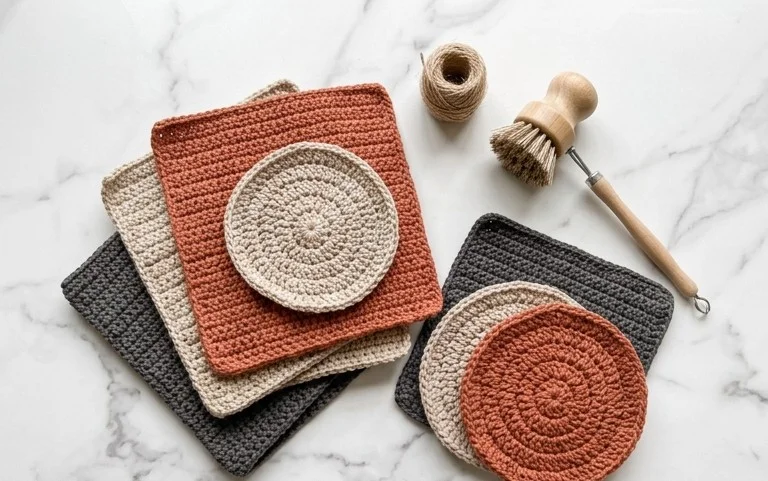
The Classic Crochet Dishcloth provides a satisfying, rhythmic project that yields a functional tool for your kitchen. Its texture is dense enough to scrub surfaces effectively while remaining flexible for washing dishes. Beginners appreciate this design because it uses basic stitches worked in a repeating pattern that builds muscle memory quickly. Because it requires only a small amount of cotton yarn, it serves as an excellent way to use up partial skeins from your stash. You can complete one in a single evening, making it a reliable choice for last-minute gifts or stocking a home with handmade essentials.
I started making these as a way to practice my tension, and now my entire kitchen is stocked with them. They hold up incredibly well through dozens of wash cycles without losing their shape.
— Sarah, home crafter
Pattern Overview & Skill Level
- Skill Level: Beginner
- Approximate Time: 1 to 2 hours
- Construction: Worked in flat rows using a simple stitch repeat
- Finished Dimensions: 8 inches by 8 inches
Materials & Supplies Needed
- Yarn: Worsted weight (#4) 100% cotton yarn, approximately 60 yards. Solid colors show texture best.
- Hook Size: 5.0 mm (US H-8)
- Notions needed: Yarn needle for weaving in ends, scissors
- Safe yarn substitutions: You may use a cotton-linen blend for increased durability, though this may make the fabric slightly stiffer. Avoid acrylic yarns for dishcloths, as they do not absorb water effectively.
Stitch Guide & Abbreviations (US Terms)
- ch = chain
- sc = single crochet
- dc = double crochet
- st/sts = stitch/stitches
- sl st = slip stitch
- Special Stitch: Seed Stitch—worked by alternating single crochet and double crochet stitches across the row. In the following rows, you place a single crochet into the top of the previous row’s double crochet, and a double crochet into the top of the previous row’s single crochet.
Step-by-Step Pattern Instructions
Dishcloth Body
- Row 1: Ch 30. Sc in the second ch from the hook, dc in the next ch. Repeat (sc, dc) across until 1 st remains. Sc in the last ch. Turn. (29 sts)
- Row 2: Ch 1, sc in the first dc, dc in the next sc. Repeat (sc, dc) across until 2 sts remain. Sc in the last st. Turn. (29 sts)
- Rows 3–28: Repeat Row 2 until the piece measures 8 inches long.
- Finishing: Fasten off, leaving a 6-inch tail. Weave the end securely back into the fabric using your yarn needle.
Care & Washing Instructions
- Machine wash your cotton dishcloths in warm water on a gentle cycle to remove oils and food residue.
- Lay the item flat on a towel to air dry, as high heat in a tumble dryer can cause cotton fibers to shrink or become brittle.
- If the corners begin to curl after washing, gently stretch and reshape the cloth while it is still damp to ensure it remains square.
Pro Tips & Common Mistakes to Avoid
- Consistent tension is vital for a flat square. If your edges are pulling inward, you are likely pulling your yarn too tight on the double crochet stitches.
- Always place a stitch marker in the first stitch of every row if you find yourself accidentally skipping the last stitch, which leads to a trapezoid shape rather than a square.
- When weaving in your ends, run the needle through the stitches in two different directions rather than just one. This prevents the tail from working its way out after repeated trips through the washing machine.
- Adjusting the size is simple by chaining an odd number of stitches for your foundation. Changing the size will increase or decrease the total yardage required, so ensure you have enough yarn if you choose to make a larger version.
Frequently Asked Questions
Can I use a different yarn weight for this pattern?
You can use DK or bulky weight yarn, but you must adjust your hook size to match the yarn label. A thinner yarn will result in a smaller, thinner cloth, while a thicker yarn will produce a bulky, heavy result.
Why does my dishcloth look like a triangle?
This usually happens because you are missing a stitch at the end of your rows. Count your stitches at the end of each row to ensure you maintain exactly 29 stitches throughout the project.
Is this pattern suitable for complete beginners?
Yes, this is an ideal first project. It teaches you how to maintain consistent stitch counts and how to transition between different height stitches like single and double crochet.
May I sell the dishcloths I make from this pattern?
You are welcome to sell finished items made from this pattern. Please credit the design to this tutorial when listing your products online or at craft fairs.
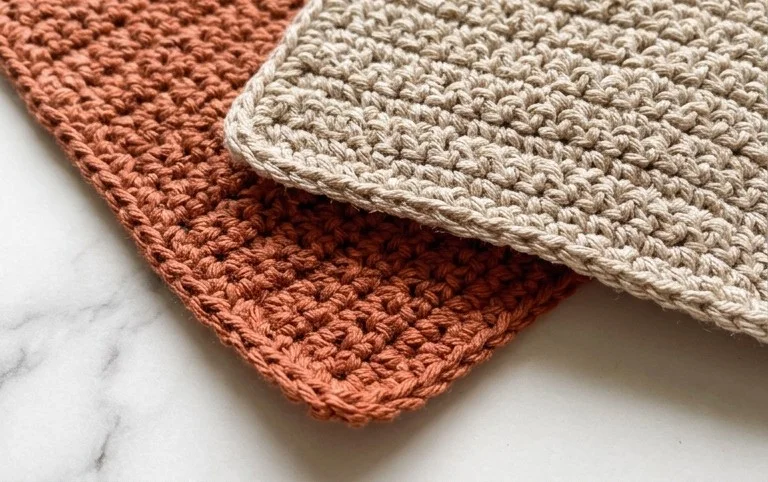
Your new handmade cloths provide a durable way to manage everyday kitchen spills while adding a touch of rustic charm to your sink area. If you want to experiment, try using a variegated cotton yarn to create subtle color shifts or add a hanging loop to the corner for easier storage. Sharing a photo of your finished work online helps other makers find inspiration for their own yarn stash. Visit the rest of the blog to find more simple designs and techniques that help you build your crafting skills one project at a time.