Easy Messy Bun Beanie Free Pattern: Step-by-Step Guide
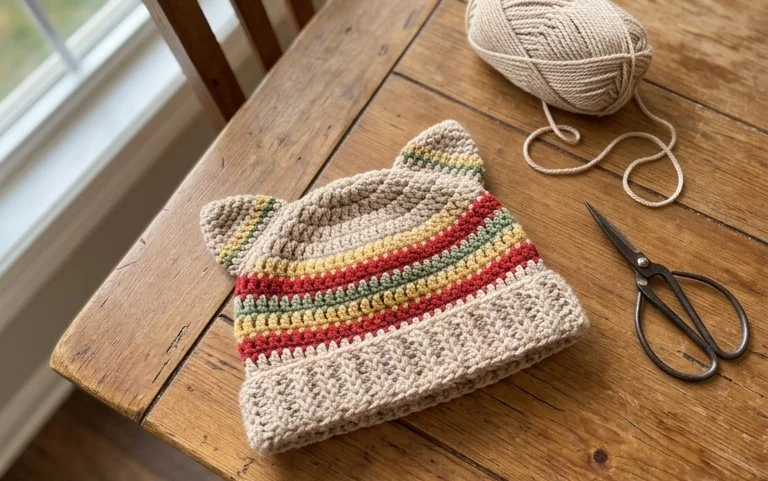
This ponytail hat sits snugly against the head with a wide, open crown that accommodates thick curls or a high bun during chilly morning walks. The soft acrylic blend provides warmth without the itchiness often found in wool, making it a comfortable accessory for daily wear. Beginners often find this project approachable because it relies on basic circular increases and simple double crochet stitches to build volume quickly. You will learn how to maintain an even tension while shaping the crown opening for a secure fit. It takes only a few hours to complete, providing an immediate sense of accomplishment for any maker.
Why You’ll Love This Pattern
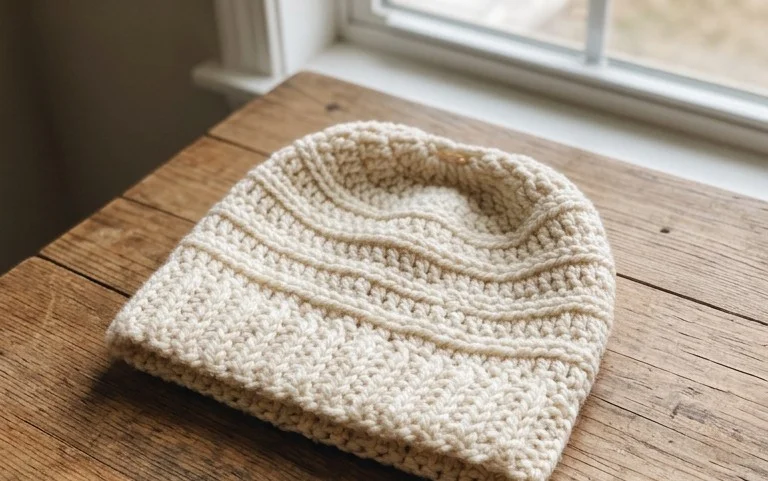
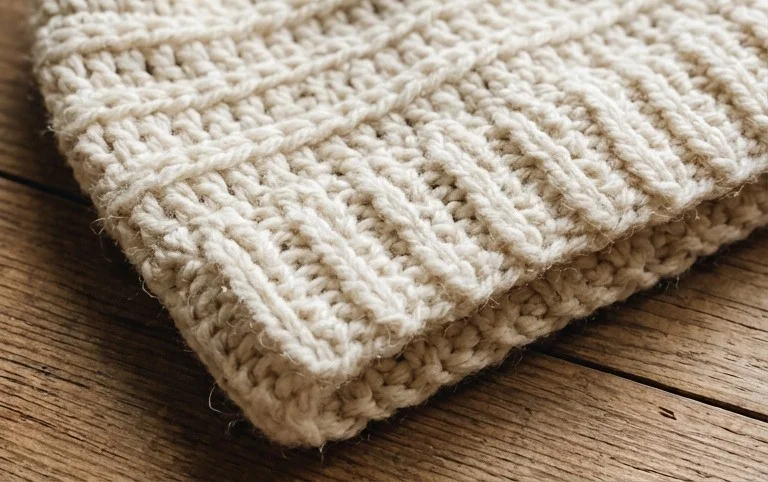
This classic crochet dishcloth relies on the durable linen stitch, which creates a dense, woven-like fabric perfect for scrubbing. Because it uses a simple combination of single crochet and chain stitches, you can work on this project while listening to an audiobook or watching television. It makes for an ideal stash-buster since it uses less than one skein of standard cotton yarn. The resulting texture is naturally exfoliating and holds up well to repeated cycles in the washing machine.
I finished three of these in one weekend for my guest bathroom. The stitch pattern is incredibly addictive and makes the cloth look much more complicated than it actually is.
— Sarah, home crafter
Pattern Overview & Skill Level
- Skill Level: Beginner
- Approximate Time: 1 to 2 hours
- Construction: Worked in flat rows back and forth, starting from a foundational chain and ending with a simple border.
- Finished Dimensions & Sizing: 8 inches by 8 inches.
Materials & Supplies Needed
- Yarn: Worsted weight (#4) 100% cotton yarn, approximately 60 yards per dishcloth.
- Hook Size: 5.0 mm (H-8).
- Notions: Tapestry needle for weaving in ends and scissors.
- Safe yarn substitutions: You may use a cotton-acrylic blend, though pure cotton is preferred for its absorbency. Using a lighter weight yarn will result in a smaller dishcloth unless you increase the starting chain length.
Stitch Guide & Abbreviations (US Terms)
- ch = chain
- sc = single crochet
- st = stitch
- sk = skip
- yo = yarn over
- Linen Stitch: Also known as the moss stitch, this is created by working (sc, ch 1, sk 1) across the row.
Step-by-Step Pattern Instructions
Main Cloth
- Foundation: Chain 31.
- Row 1: Sc in the 4th ch from the hook, *ch 1, sk 1, sc in the next ch; repeat from * across to the end. Turn. (15 sc, 14 ch-1 spaces).
- Row 2: Ch 2, sc in the first ch-1 space, *ch 1, sk 1, sc in the next ch-1 space; repeat from * across, ending with a sc in the turning chain space. Turn. (15 sc, 14 ch-1 spaces).
- Rows 3-30: Repeat Row 2 until the piece forms a square.
Border
Do not fasten off after Row 30. Instead, rotate your work to crochet around the perimeter of the dishcloth.
- Rnd 1: Ch 1, work 2 sc into the corner stitch, then continue with sc evenly spaced along the edges, working 3 sc into each corner to prevent the edges from curling. Join with a sl st to the first sc.
- Finishing: Fasten off, leaving a 6-inch tail. Use your tapestry needle to weave the tail back and forth through the stitches on the back side of the cloth to secure it.
Care & Washing Instructions
- Machine wash in warm water on a gentle cycle using mild detergent.
- Lay flat to dry on a clean towel to prevent the cotton from stretching or warping.
- If the cloth becomes misshapen, pull gently into a square shape while damp to block it into position.
Pro Tips & Common Mistakes to Avoid
Maintaining consistent tension is the most important part of this pattern. If your chains are too tight, the fabric will feel stiff and lose its flexibility, so keep your movements relaxed. Use a stitch marker on the first stitch of every row to ensure you do not accidentally drop or add stitches at the edges, which is the most common mistake for beginners. If you choose to resize this project, remember that the starting chain must be an odd number to maintain the linen stitch sequence. Weave your ends in by threading the tail through several stitches in opposite directions to ensure the yarn does not pull out during the agitation of a wash cycle.
Frequently Asked Questions
Can I use a different yarn weight for this pattern?
Yes, you can use a lighter or heavier yarn, but your gauge will change. If you use a thinner yarn, increase your starting chain count by multiples of two to maintain the pattern width.
Is this project suitable for a complete beginner?
Absolutely. The linen stitch uses only two basic skills: the chain stitch and the single crochet. It is one of the most forgiving patterns for learning how to control your hook.
How can I prevent the edges from waving or curling?
Ensure you are working the correct number of stitches into each corner during the border round. If the edges pull inward, you likely missed a stitch; if they ruffle, you likely have too many stitches.
May I sell the dishcloths I make from this pattern?
You are welcome to sell finished items made from this pattern, provided you credit the design. Always check your local regulations regarding the sale of handmade textile goods.
Your finished hat brings a polished look to winter outfits while keeping your hair neatly styled and out of your face. You can customize the look by using a self-striping yarn to create bold color changes or adding a removable faux fur pom-pom to the side for extra flair. Posting a photo of your work on social media helps other crafters see how different color choices turn out. Browse the rest of the blog for more accessories and seasonal projects to keep your hands busy throughout the year.